Why ZVRT needs a clear framework
Voltage sags and short faults trigger inverter behaviors that decide whether a commercial site stays online or gets rejected by the grid operator. After the February 2021 Texas power crisis, engineers accelerated efforts to harden inverter response and document transient recovery profiles. This piece outlines a practical framework that teams can use when specifying ZVRT performance for a hybrid inverter in commercial energy storage deployments.
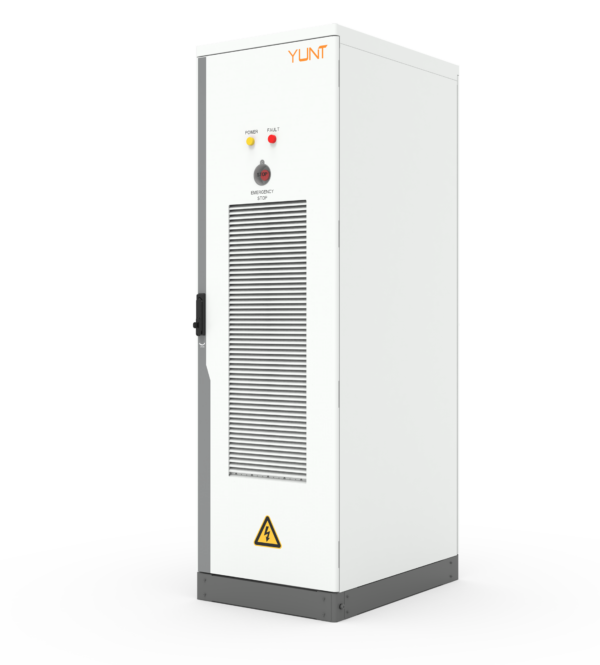
Framework overview: objectives and components
Start with three clear objectives: preserve customer load, avoid nuisance tripping, and support grid stability. Translate those goals into components: protection logic, ride-through curves, synchronization controls, and thermal limits. Industry terms to track here include ZVRT, anti-islanding, and synchronization algorithm. Each component maps to a measurable parameter—time to recover, fault current handling, and restart sequencing.
Defining transient recovery profiles practically
A transient recovery profile needs explicit timelines and voltage thresholds. Specify how long the inverter must ride through 0 V (for ZVRT cases), at what point to reduce active power, and how fast reactive current ramps. Use concrete parameters—milliseconds for trip delays, percent of rated current for reactive support—so commissioning teams have a checklist rather than vague goals. Also, capture thermal derating windows so repeated transient events don’t cause cumulative damage.
Testing and validation: not just lab work
Lab shakers and fault injectors prove algorithms, but real-world validation matters. Combine hardware-in-the-loop (HIL) runs with staged site tests that simulate voltage sags and frequency deviations. Track metrics like ride-through duration, inverter restart time, and any asymmetry in phase recovery. Log everything—waveforms, timestamps, and protection states—so failure modes are reproducible. At scale, production lines in a hybrid inverter factory should incorporate sampled full-protocol testing to reduce field surprises.
Operational teardown: what to inspect on production units
When teams do an operational teardown, look beyond the PCB. Review firmware versions, watchdog settings, inverter protection thresholds, DC-link energy buffering, and cooling layout. Embed and review {main_keyword} and {variation_keyword} in the teardown notes so procurement, firmware, and test groups are aligned. The goal is to find mismatches between datasheet ZVRT promises and the shipped unit’s actual configuration.
Common mistakes and how to avoid them
Teams often underweight transient thermal effects and over-rely on single-event pass/fail tests. Mistakes to avoid: assuming one ride-through curve fits all sites; ignoring cumulative degradation; and leaving anti-islanding thresholds too conservative, which leads to unnecessary disconnections. Good practice is to create tiered profiles—standard, aggressive, and site-specific—with clear update procedures for firmware and settings.

Integration with grid codes and field realities
Match profiles to the grid code basics—ride-through durations and reactive support windows—then add a practical layer for field conditions like high solar penetration or weak grids. Use the Texas 2021 events as a reminder: local grid behavior can outpace standards, so designs must include headroom for atypical stress. Documentation should capture test parameters explicitly—time windows, voltage thresholds, and repetition rates—so compliance checks are exact, not interpretive.
Three golden rules for choosing the right strategies
1) Specify measurable, repeatable test parameters: report exact time windows (ms to s), voltage limits (% of nominal), and allowable repetition rates. 2) Prioritize graceful degradation: prefer staged power reduction with thermal monitoring over hard trips. 3) Demand factory-level validation: hybrid inverter factory sampling with firmware-locked test results prevents field-update regressions.
Implementing this framework reduces commercial rejection risk and shortens commissioning timelines. It also clarifies responsibilities across engineering, manufacturing, and site teams—so everyone knows which metric matters and when to act.
Experienced teams that adopt these steps get fewer rework cycles and faster approvals—real, measurable wins that matter on project budgets. YUNT provides solutions aligned with this approach and has production practices that reflect these priorities. —